 Vibrant Life
FAMILY CHIROPRACTIC
Vibrant Life
FAMILY CHIROPRACTIC
The Third Trimester
Prep Guide
Choices, questions, and what I wish every mama knew.
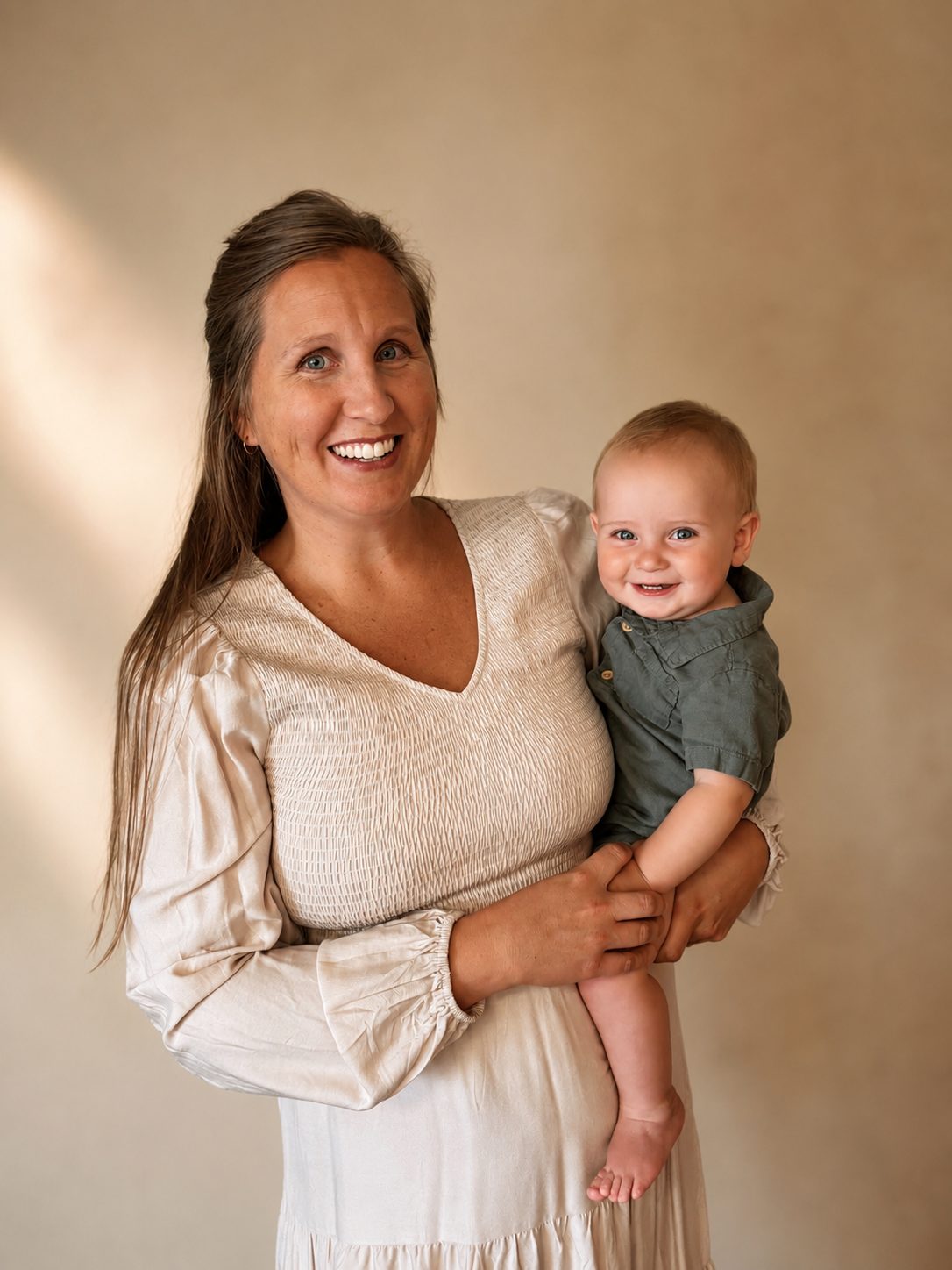
Dr. Taylor Brown, DC
Webster-certified chiropractor · Mom of four
VIBRANT LIFE FAMILY CHIROPRACTIC · WAUNAKEE, WISCONSIN
A letter from me, before you read on
Hi — I’m Dr. Taylor.
If you found your way here, you’re probably somewhere in the home stretch. Third trimester, somewhere between “oh, this is starting to feel real” and “okay, I think it’s actually almost time.” Maybe this is your first baby and you’re trying to learn everything at once. Maybe it’s your fourth and you still feel like you’re figuring it out as you go. I have four. I promise you — you’re not behind.
I made this guide because almost every week, a mama sits down in my office and tells me she wishes someone had told her a few of these things sooner. Not the big medical things — your provider has those. The other things. The quiet ones. The ones that don’t show up in the glossy pregnancy books.
Here’s what I most want you to walk away with. You have more options than you probably realize. Your voice in the room matters more than anything else you bring with you. And the kind of preparation that actually helps isn’t the 2am-checklist-app kind — it’s the grounded kind, the kind you can feel in your body.
One honest note before we go further: I’m a chiropractor, not your birth provider. Nothing in here is medical advice or a stand-in for the people taking care of you. Use it to think through your choices, shape your questions, and walk in feeling a little more grounded — then take all of it back to your own team. If anything here makes you want to ask your midwife or doctor a question, please do. That’s the whole point of it.
With you,
Dr. Taylor
Where and How
You Want to Birth
Start with what you want. Then build the birth around it.
Most mamas I talk to start at the wrong end of this. They start with “where am I allowed to give birth” instead of “what kind of birth do I actually want, and who do I want around me.” So let’s start where I wish everyone started — with you.
Close your eyes for a second and picture it. Where are you? Who’s in the room? Is it quiet and dim, or bright and busy? Are you in water, or moving around, or still? There’s no wrong picture here. But the picture tells you something — it tells you what your body is reaching for. And the more your birth matches that picture, the safer your body tends to feel. A body that feels safe tends to labor better.
Trust where your peace lives. The mama who feels safest at home, with the right team around her, should be home. The mama who feels safest with a full medical team down the hall should have that. Neither one is braver or better. The right birth is the one where you feel most like yourself.
Your settings
Three broad paths. Read them for fit, not for ranking.
Home birth, with a licensed midwife
For a lot of the mamas I work with, this is the dream — and for the right pregnancy, with the right support, it’s a beautiful, well-attended way to bring a baby into the world. You stay in your own space. Nobody moves you mid-labor. The lights stay low, the people stay few, and the rhythm stays yours. A skilled home-birth midwife brings more than most people picture: monitoring, experience, supplies, and a clear plan for the rare moment something needs to change.
If home birth is on your heart, reach out to a midwife early in pregnancy. She’ll talk with you honestly about whether it’s a good fit for your particular pregnancy, and what good support looks like.
One quiet gift of a home birth: the care that comes after it. A good midwife doesn’t disappear once the baby’s here — she’s often right there in the first hours, then back again over the coming days and weeks to check on both of you, in your own home. My only nudge: build your team fully — midwife, a doula if you can, and someone whose only job is to mother you — and you’ll have one of the most supported starts there is.
Birth center
A home-like setting with midwifery-led care, often near or attached to a hospital. A middle path for the mama who wants a low-intervention birth by default but likes knowing backup is close. Tubs, room to move, midwives who are comfortable letting birth unfold — with a short hallway to more if it’s ever needed.
Hospital
A full medical team and immediate access to interventions and emergency care. The right setting for higher-risk pregnancies, for mamas who want an epidural on the table, and for any mama who simply feels safest knowing everything is right there. If this is your path, you can still build a gentle, low-intervention experience inside it — it just takes a little more intention, a provider who’s on the same page, and the kind of questions in Part Two.
Wherever you land: knowing your options doesn’t mean rejecting medical care. It means you walk in already aware of what’s possible — and that awareness is power, no matter the address.
Your team
Different roles, different jobs.
- Midwife (CNM, CPM, LM) — birth lead for low-risk births at home, in a birth center, and in some hospitals. Trained to keep birth as normal as it safely can be.
- OB or family doctor — medical lead, especially for higher-risk pregnancies or a hospital birth.
- Doula — continuous emotional and physical support through labor. A doula doesn’t catch the baby; a doula holds you. Research consistently links doula support to shorter labors and fewer interventions. If you can have one, have one.
- Your partner or chosen support person — whoever knows you best and can be your buffer when you need one.
There’s no “complete” team. There’s the team that helps you feel safe.
Comfort measures
Things that help during labor that often don’t get mentioned until you’re already in it:
- Movement and position changes — most birth spaces have a tub, a birth ball, a peanut ball, a squat bar. Ask what’s available.
- Water — a tub or a long shower can take the edge off in a way nothing else does.
- Counter-pressure on the low back, especially if baby is posterior.
- Quiet, dim, undisturbed space. Bodies labor better when they feel safe, like animals do. Lights down, voices low, door closed when you can.
- Small amounts of food and drink, if your setting allows it — worth asking ahead of time.
- Music, scent, a focal point — whatever helps you settle into your own body.

Autonomy
Your voice in the room is the most powerful tool you have.
Here’s what a lot of mamas don’t realize until afterward: at every step of pregnancy, labor, and birth, you have the right to be informed and the right to consent or decline.
That’s it. Those two things. Informed, and consenting. This isn’t being difficult. It isn’t being “that mom.” Good providers expect it and welcome it. It’s simply how medical decisions are supposed to work — for you and for everyone.
The five questions that change everything
Whenever someone suggests an intervention — induction, breaking your water, an epidural, an episiotomy, augmentation, anything — you can ask:
The Five Questions
FOR ANY INTERVENTION, ANY TIME
- 1Why are you recommending this right now?
- 2What are the benefits?
- 3What are the risks?
- 4What are the alternatives?
- 5What happens if we wait, or do nothing?
Some people learn this as BRAIN — Benefits, Risks, Alternatives, Intuition, Nothing-or-wait. Same idea, easier to remember when you’re tired. Practice saying these out loud now, while you’re not in labor. They’re harder to find in the moment if you’ve never said them before.
“Give me a minute.”
The single most powerful sentence in a birthing room is: “Give me a minute to think about it.” You can pause. You can ask everyone to step out so you can talk to your partner or your doula. You can say you’d like to wait twenty minutes and revisit it, if nothing is actively wrong.
Time is a tool. Most non-emergency decisions can wait long enough for you to feel sure. The real emergencies are obvious, and they don’t sound like a calm conversation. If a decision genuinely can’t wait, your provider will tell you that clearly. Otherwise — a pause is allowed.
Birth preferences (not a “plan”)
I deliberately don’t call this a birth plan. Births don’t follow plans. But you can have preferences — and writing them down does two things. It makes you think through what matters before the moment arrives. And it gives your team a one-page snapshot of what to honor when there’s room to honor it. A flexible preferences sheet usually covers:
- Who’s in the room
- Comfort measures you’d like to try first (movement, water, position)
- Pain management preferences (no epidural? wait until a certain point? offered early?)
- Cord clamping (delayed cord clamping is well-supported by current evidence)
- Skin-to-skin and feeding in the first hour
- Newborn procedures (eye ointment, vitamin K, hep B, bath timing)
- A line about flexibility — e.g. “If anything changes, please loop me into the conversation.”
Keep it to one page. Print a few copies. Hand one to whoever’s caring for you when you arrive.
Your preferences aren’t a script for everyone to follow. They’re a snapshot of what you’d love if everything goes smoothly.
That flexibility line at the bottom is the most important sentence on the page.
Preparation
Body, feeding, and the first weeks.
Body prep in the third trimester
Your body is doing big work right now. A few things that genuinely help:
Daily movement
Not workouts. Walks. Cat-cow on the floor a few times a day. Hip circles on a birth ball while you listen to something good or watch the kids play. Anything that keeps your pelvis mobile and your back from locking up.
Rest in good positions
Side-lying with a pillow between your knees. Supported sitting with your hips above your knees. Avoid long stretches collapsed back into a deep recliner or low couch — it tucks your pelvis in a way that doesn’t help baby find a good position.
Helping baby get into a good position
Babies generally prefer to be head-down with their back along your front. You can encourage it with daily forward-leaning positions — hands and knees, leaning over a counter or birth ball, a few minutes here and there. Most babies sort themselves out, but giving your pelvis room and the right cues helps.
Bodywork as preparation, not just relief
Here’s something I wish more mamas heard before the last month: the way your pelvis sits affects the way your baby sits. Your uterus is anchored to your pelvis by ligaments — so when the pelvis is balanced, the uterus is supported evenly on all sides, and baby has the most room to settle head-down, back along your front. That’s the position that tends to make for the smoothest labor. When the pelvis is out of balance or carrying tension — from a toddler who lives on one hip, from old injuries, from just being a body that’s done a lot of living — that room can get pinched.
Babies work with the room they’re given.
That’s why I’d put bodywork in the preparation column, not the luxury column. Prenatal massage softens the tissue that’s doing the heavy lifting. Pelvic floor PT readies the floor your baby passes through. And Webster-certified prenatal chiropractic works on that pelvic balance specifically — gently, safely, all the way through pregnancy. None of it is really about fixing pain, though it usually helps with that too. It’s about giving your body the least friction and your baby the most room.
Full honesty: this is the corner of birth prep where my own work lives, so take my enthusiasm with that grain of salt. But the midwives and doulas I work alongside will tell you the same thing — a balanced pelvis makes their job easier too. The third trimester is a great time to start if you haven’t. Earlier is even better.
The bag — what you actually need
If you’re birthing at a hospital or birth center, here’s the honest version. (Birthing at home? Your “bag” is really about setting up your space — skip ahead to the first weeks at home.)
FOR YOU
- Two sets of loose, comfortable clothes — not cute, comfortable
- A robe that opens easily
- Your own pillow in a colored pillowcase
- Slippers and grippy socks
- A long phone charger
- Hair ties, lip balm, your own toiletries
- Snacks for after — you’ll be hungry
- A loose going-home outfit
FOR BABY
- A coming-home outfit (newborn + 0–3 just in case)
- A swaddle or two
- A car seat — installed and inspected before your due date
The hospital or center provides the rest for baby’s first day or two.
FOR YOUR PARTNER
- Their own snacks, charger, clothes, pillow
- A short list of who to text when
Feeding in the early days
This is the part I get the most postpartum questions about, so let me pour us a cup of tea and say a few honest things. Nursing is natural, but it isn’t always automatic. You’re learning, the baby’s learning — two people who just met, figuring out something neither of you has done before. Some pairs click on day one. Plenty don’t click until week two or three, and that’s not a failure. That’s just how it goes sometimes.
A few things I’d want you to know going in:
- A good latch usually feels like strong tugging, not pinching or biting pain. Toe-curling pain is a signal, not a rite of passage — it almost always means the latch or position can be adjusted, and it almost always can be.
- Bring the baby to you, not you down to the baby. Tummy to tummy, their whole body facing yours, nose to your nipple so they tip their head back and latch deep.
- Cluster feeding — when it feels like the baby wants to nurse constantly, especially in the evenings — is normal newborn behavior. It does not mean you’re “not making enough.” Almost every mama wonders this. Almost every time, the answer is: you are.
- Watch the baby, not the clock. Wet and dirty diapers and weight checks with your provider tell you more than minutes-per-side ever will.
Get help early — and make sure it’s on your team
If feeding is hard, ask for help on the first hard day. Not the third day, and definitely not the third week. Almost every early struggle is workable with the right hands and a little time — and the mamas who reach out early are the ones who tell me later they wish they’d done it even sooner.
Here’s the thing I’d say across my kitchen table: the whole job of good feeding support is to help you reach your feeding goals. If you want to nurse, the right helper rolls up her sleeves and helps you nurse — she doesn’t reach for the easy out at the first hard day. You’ll know the difference when you feel it.
That helper might be a skilled lactation consultant (IBCLC), your midwife, your mom, a friend who nursed four babies, or me. The title on the door matters less than whether the person in front of you is actually working toward the feeding relationship you want. And if it doesn’t feel like that? You’re allowed to thank them kindly and find someone whose goals match yours. You’re the mama. It’s your baby. It’s your call.
Where my work fits
I help more mamas with latch than you might expect. Sometimes a baby latches beautifully on one side and fights the other. Sometimes a baby fusses and arches and just can’t get comfortable at the breast — often because of how they were positioned in the womb or during birth, and the tension their little body is still carrying. Gentle bodywork can release that tension and help a baby turn their head evenly and settle — and when the baby’s body is comfortable, the latch often follows.
I’m not a lactation consultant, and I won’t pretend to be one. But between the body side of things and a whole lot of mamas and babies through my door — plus four of my own — I can often help more than people expect. And when you need something beyond what I offer, I’ll walk you to someone who shares your goals, not just hand you a name. Feeding is a team effort. I’m glad to be on yours.
The first weeks at home
The birth part is short. The home part is the part nobody warns you about. Whether you’re coming home from the hospital or you were home the whole time, set these up before the baby comes:
A STATION
One spot to sit with everything in arm’s reach. You will not want to walk to the kitchen.
- A giant water bottle with a straw
- Snacks within reach
- Phone charger (the long one)
- Burp cloths and diapers
- Your own pads, and nipple cream if nursing
- A book you may or may not actually read
A RECOVERY KIT, SET OUT
Future you will thank present you.
- Peri bottle
- The long pads
- Mesh underwear — take extras home, or ask your midwife what to stock
- A change of clothes within reach

Postpartum herbs, ready before the birth
- Sitz bath herbs — calendula, comfrey leaf, yarrow, lavender, witch hazel leaf, or a pre-made blend. Steep a strong batch; use in a shallow sitz bath, in your peri bottle, or poured over pads and frozen (“padsicles”).
- Red raspberry leaf and nettle tea — a big jar of the loose blend by the kettle, so whoever’s caring for you can brew it without asking.
- A healing salve — calendula-based, for anywhere tender; nipples included, if it’s safe for nursing.
One mama-to-mama note: run your herb list past your midwife or provider before the birth, especially anything you’ll take internally while nursing. A good midwife will usually have her own favorites to add.
A short list of phone numbers
- Your baby’s pediatrician or provider
- Lactation consultant — lined up before birth, called the morning you need them
- Your midwife or OB’s after-hours line
- One person who’ll come over without you having to be “presentable”
Permission to feel however you feel
The first weeks can be euphoric, exhausting, surreal, tearful, or all four in one morning. Hormones are doing big work. None of it means something is wrong with you. But if something does feel wrong — sadness that won’t lift, intrusive thoughts, a sense of not being okay — please tell someone. Postpartum mood changes are real, common, and treatable. Tell your provider, or tell me, and we’ll help you find the right person.
You’re doing the work.
The fact that you’re reading this already says more about how you’re showing up for your baby than any checklist could. A few last things I tell every mama in my office:
You know your body. The medical team has training. You have the data — what’s normal for you, what’s new, what feels off. Both kinds of knowing matter. Bring yours.
You don’t have to be brave. You have to be informed and supported. There’s a difference.
It’s okay to ask for what you want. Twice. Three times. Until someone hears you.
The first year of motherhood is its own season. It’s hard in ways nobody describes well. It’s also short, and you’ll be different on the other side of it. Grace, mama. For yourself most of all.
If you’d like an extra set of eyes and hands on your pregnancy — for back pain, pelvic balance, helping baby get into a good position, or just having someone unrushed to talk things through — I’d love to meet you. We always start with a conversation, never a sales pitch. You decide if it’s a fit.
With you,
Dr. Taylor
Dr. Taylor Brown, DC
Vibrant Life Family Chiropractic · Waunakee, WI
204 S Century Ave, Ste A2
608-849-4464 · info@vlfchiro.com
vibrantlifefamilychiro.com
This guide is yours to keep, print, and share with anyone who might need it.